Why make art? I think I have been asking this for a long time, even when the question came out differently. It has surfaced in the scientific collaborations I have pursued, in the phenomena I have spent time looking at, and in my uncertainty about what art is doing among other ways of knowing. Looking back over eight years of practice, I can feel that question gathering force. This essay is an attempt to stay with it, and to think about where it might take my work in the next decade.
The summer of 2026 was a turning point in that process. I had been thinking about my final thesis for about a year and a half when I was asked to recalibrate. I have a whole year to work on it, so what do I want to make? I kept returning to something that comes before the form: why this work, and why now? What is it asking of me? That shift changed how I approached the thesis. It became a way to look at my own practice and the questions that have been moving through it.
There is a lot of privilege in having the time and access to ask these questions. I am doing my master’s at Harvard, and I have the opportunity to work and learn alongside colleagues at the MIT Media Lab. I want to take that seriously. These experiences have made me think about what I bring into a collaboration, what I take from it, and whose knowledge ends up serving the work. Collaboration can open ways of seeing I would not reach alone. It can also be uneven, even exploitative. I want to understand that tension as part of my practice, and what it asks of me as I think about the next decade of making.
Precedence
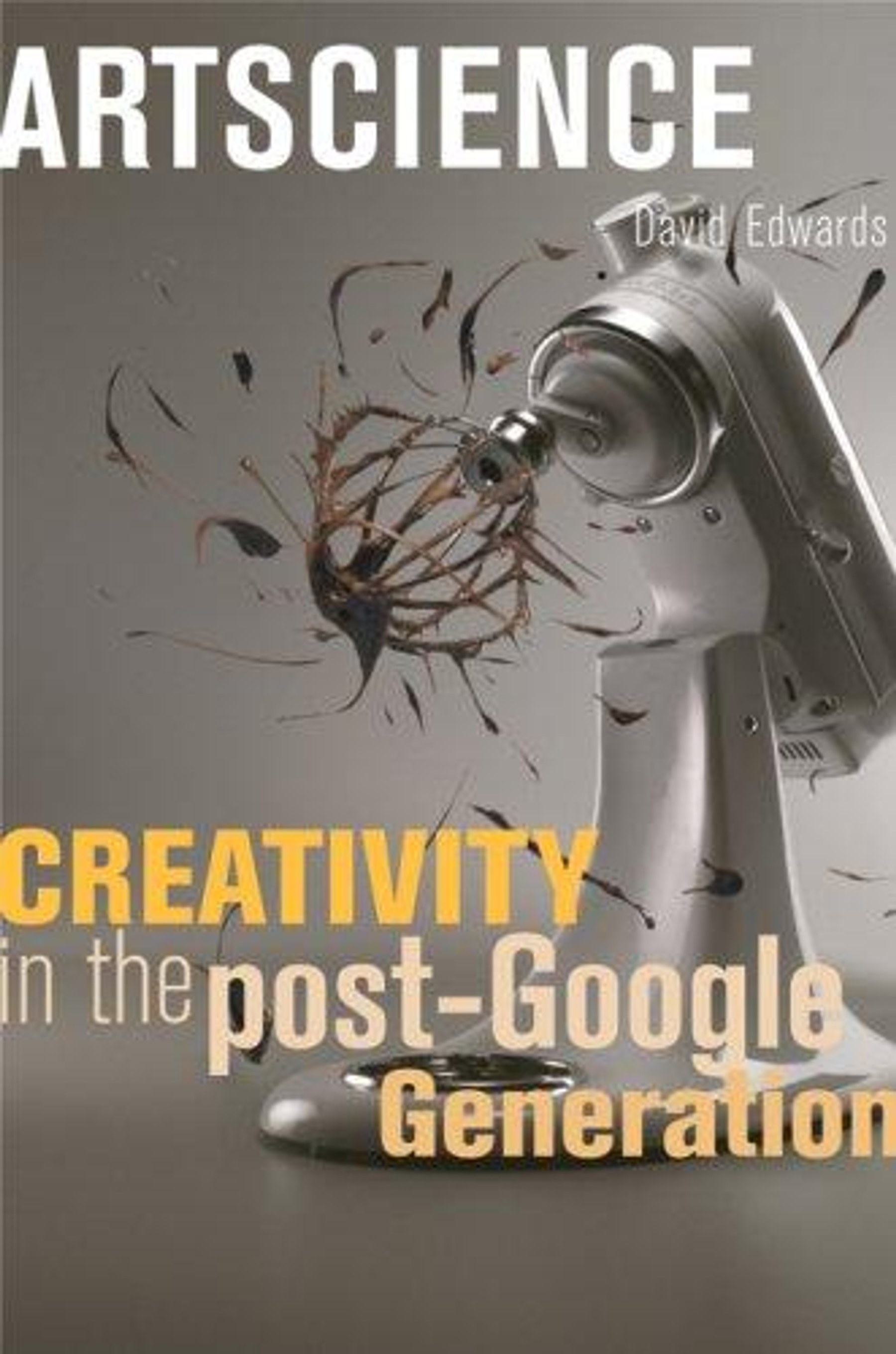
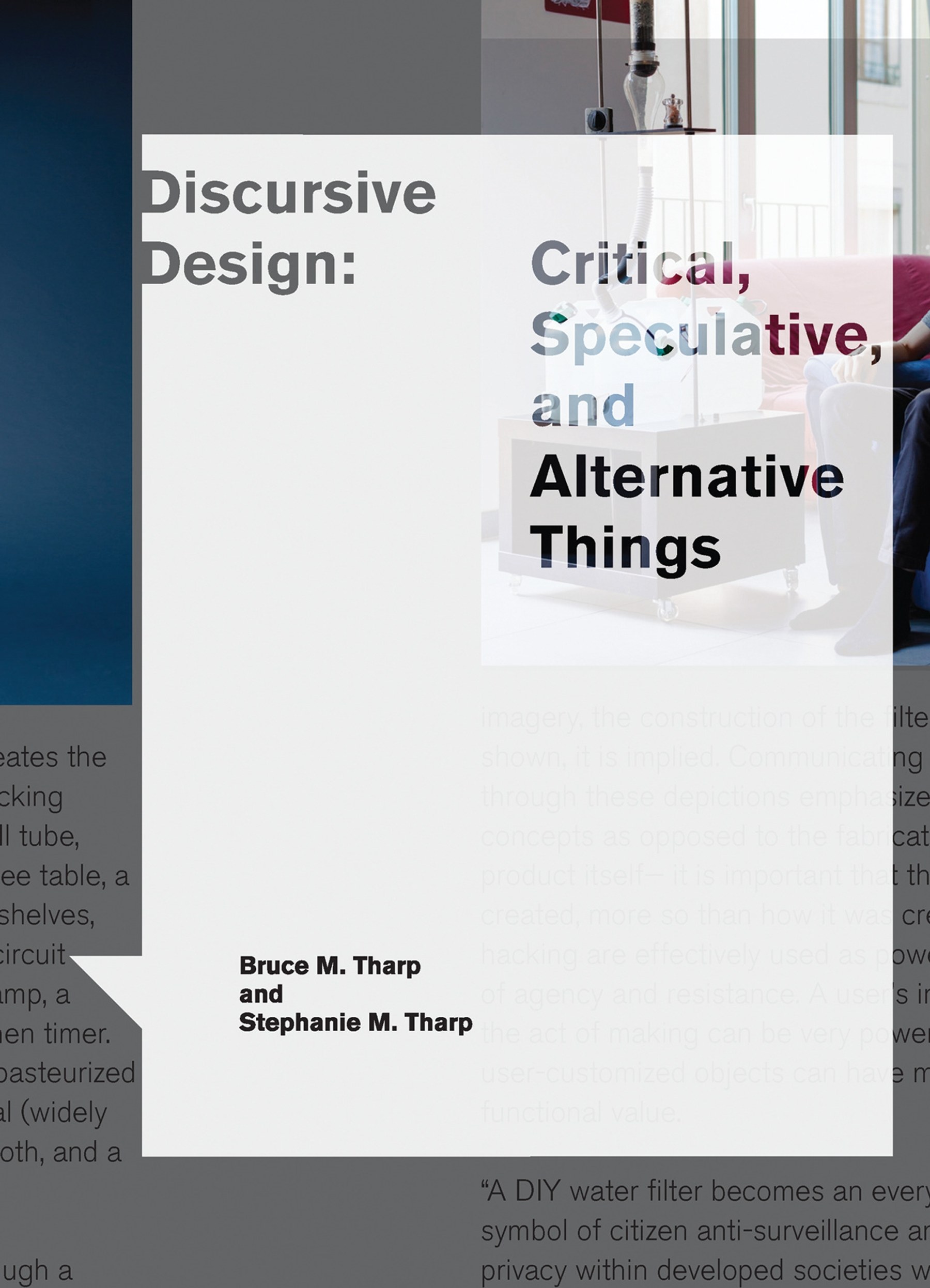
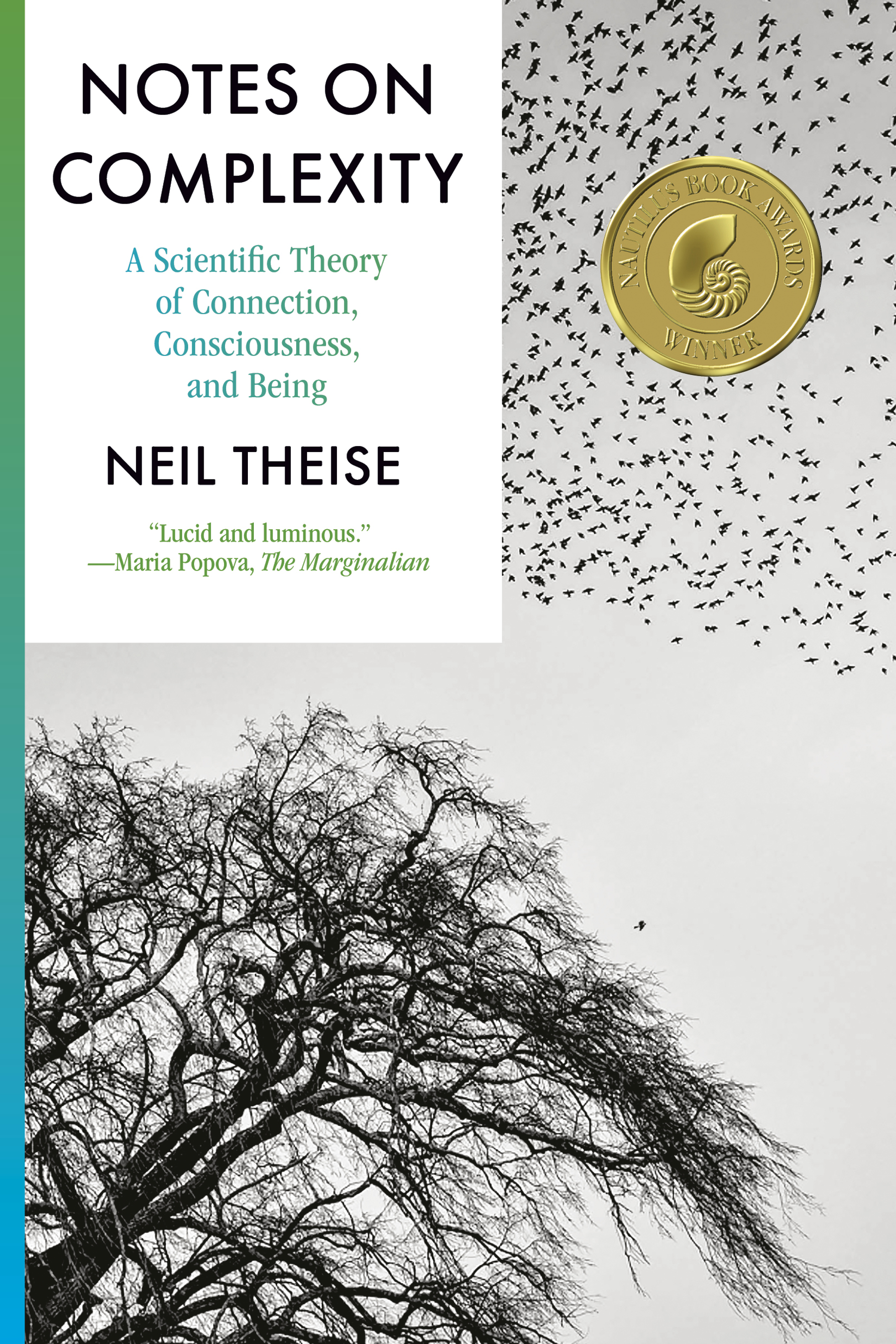
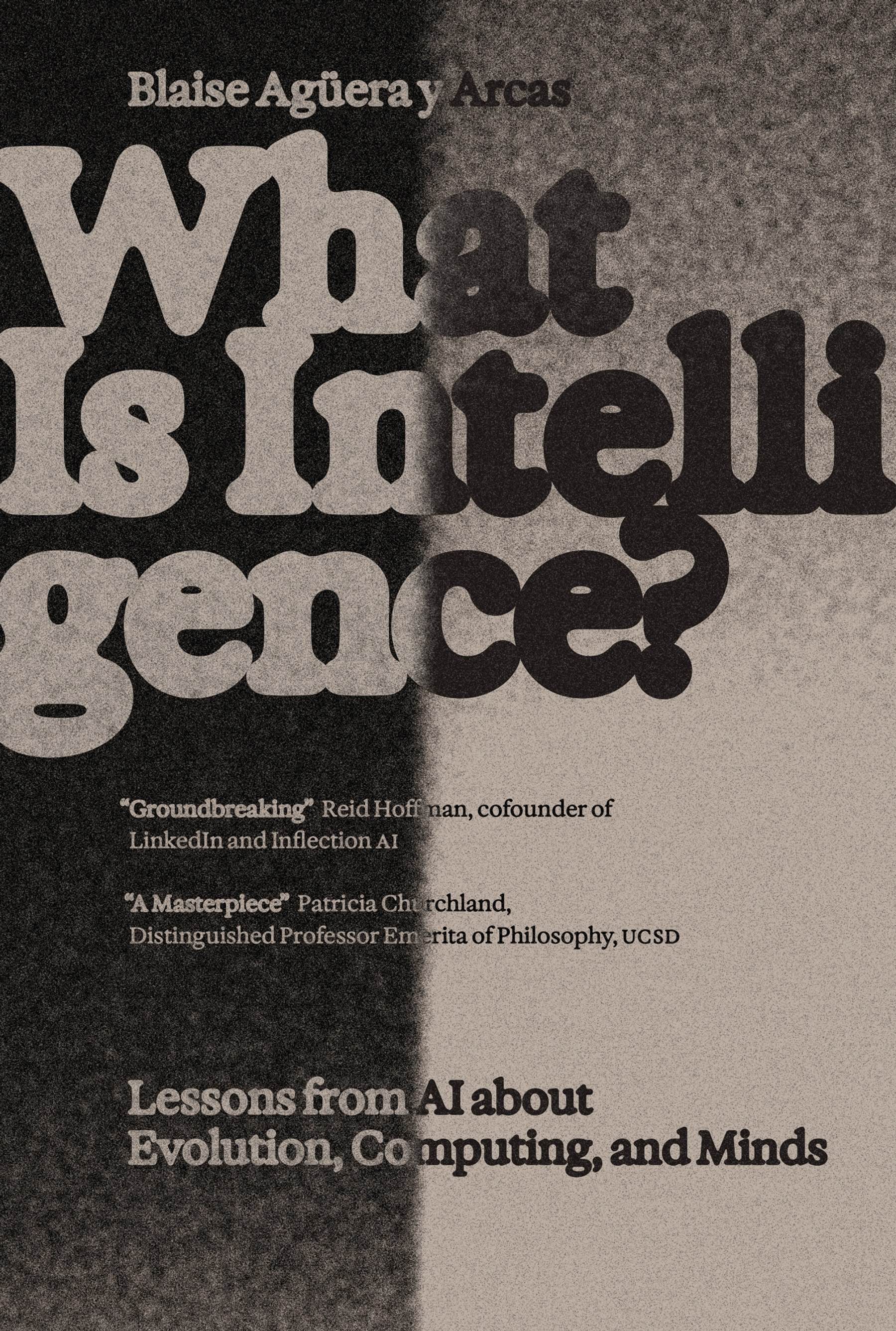
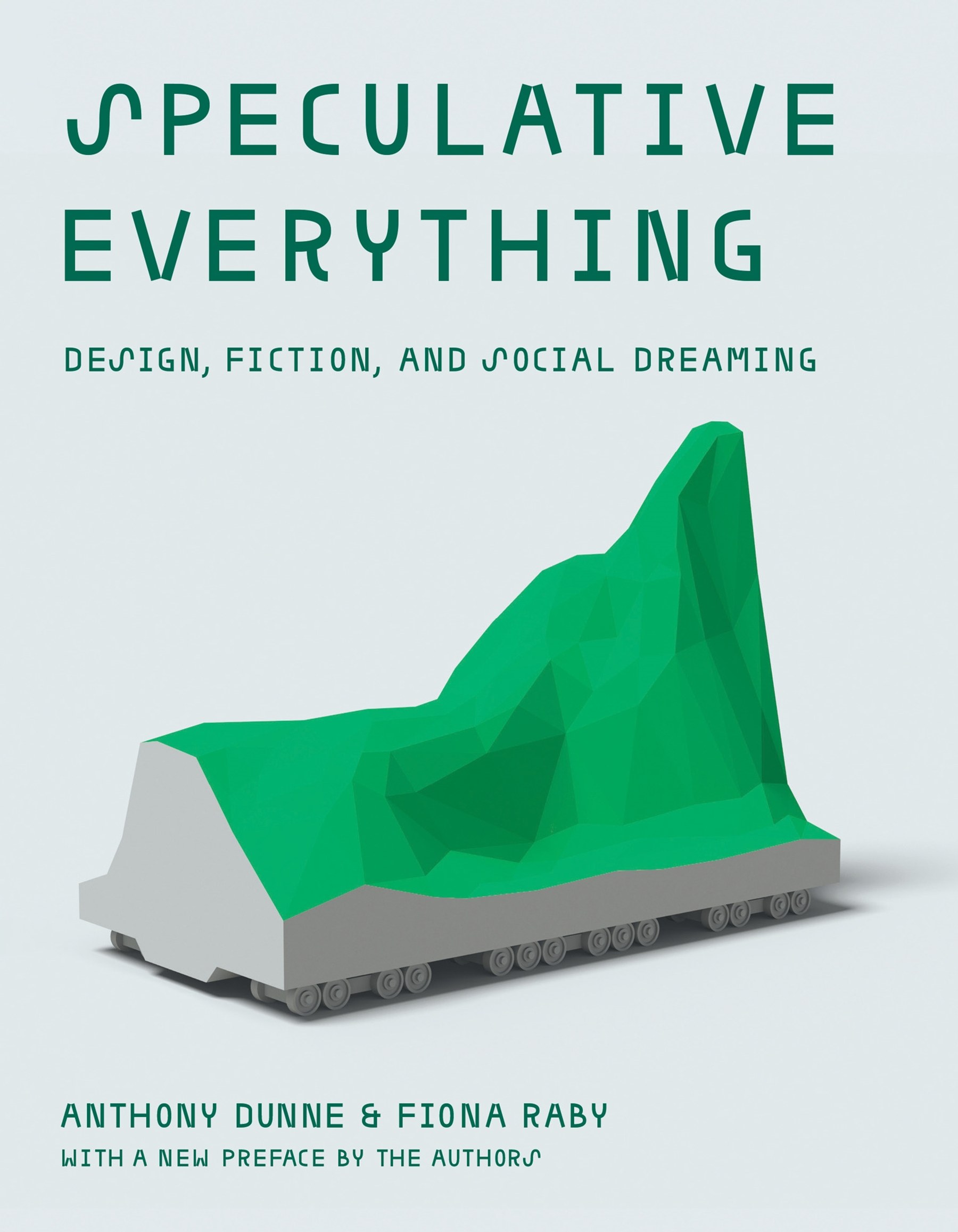
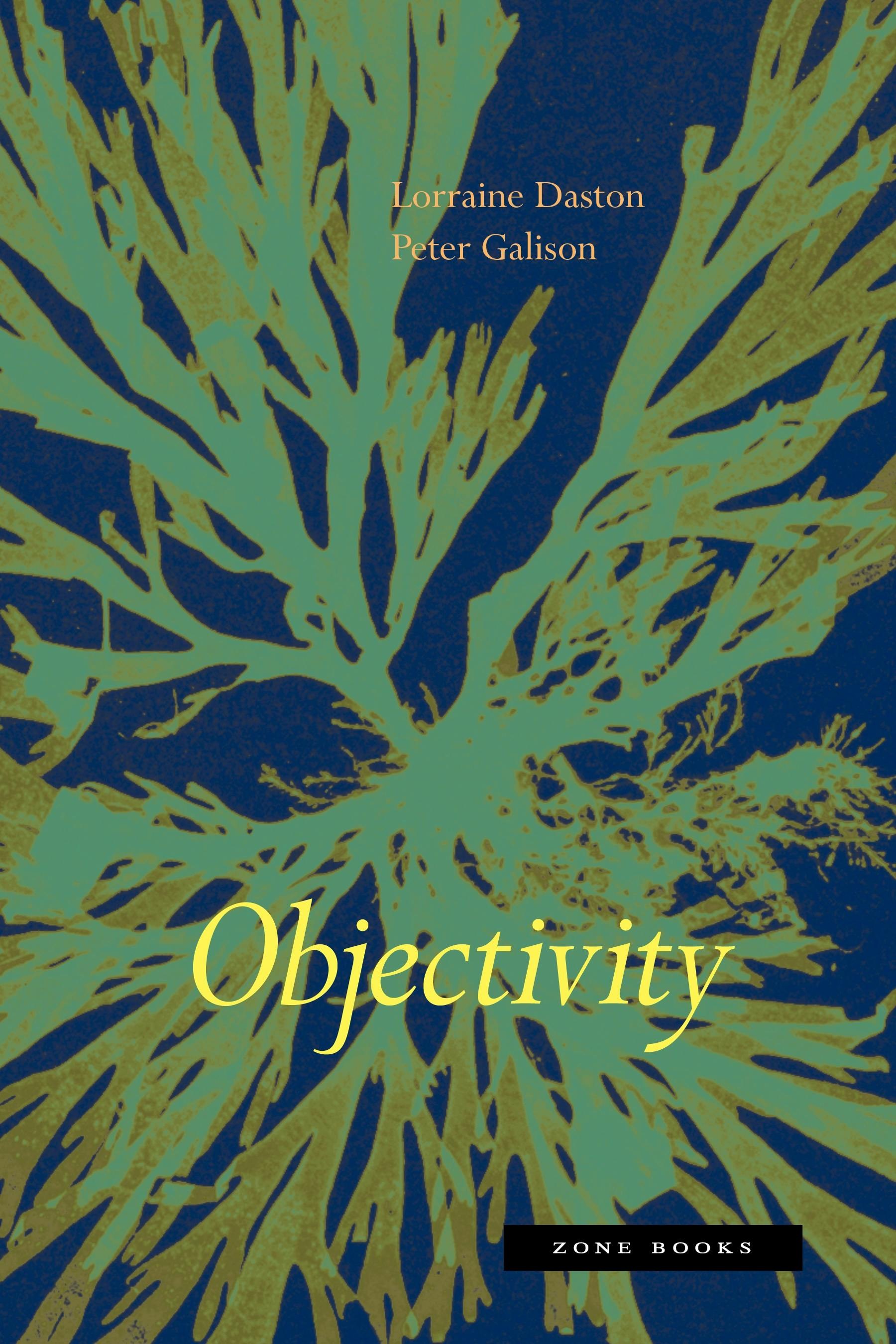
Reading has become a way of thinking through other people’s lenses, including the scientist’s perspective. David Edwards’s way of talking about art and science is very different from how I engage with it in my own practice. ArtScience has helped me ground some of the frameworks I am thinking through, while also giving me another position to work against. Notes on Complexity does something different. Neil Theise approaches complexity as a biologist, and an artist helped shape the way he thinks about it. I am interested in that movement between seeing a system from a much higher level and then diving back into its details. I think artists often do this through making, even when that know-how remains tacit.
Discursive Design and the approaches to speculative design in Speculative Everything also give me other ways to expand my practice through my background as a designer. I have been thinking about design as a form of applied arts, and about how these approaches circle back to the arts. The aesthetic qualities of an object or experience can become a way to engage with thinking and discourse. For me, that opens up ways of using what I know as a designer to ask questions through the work.
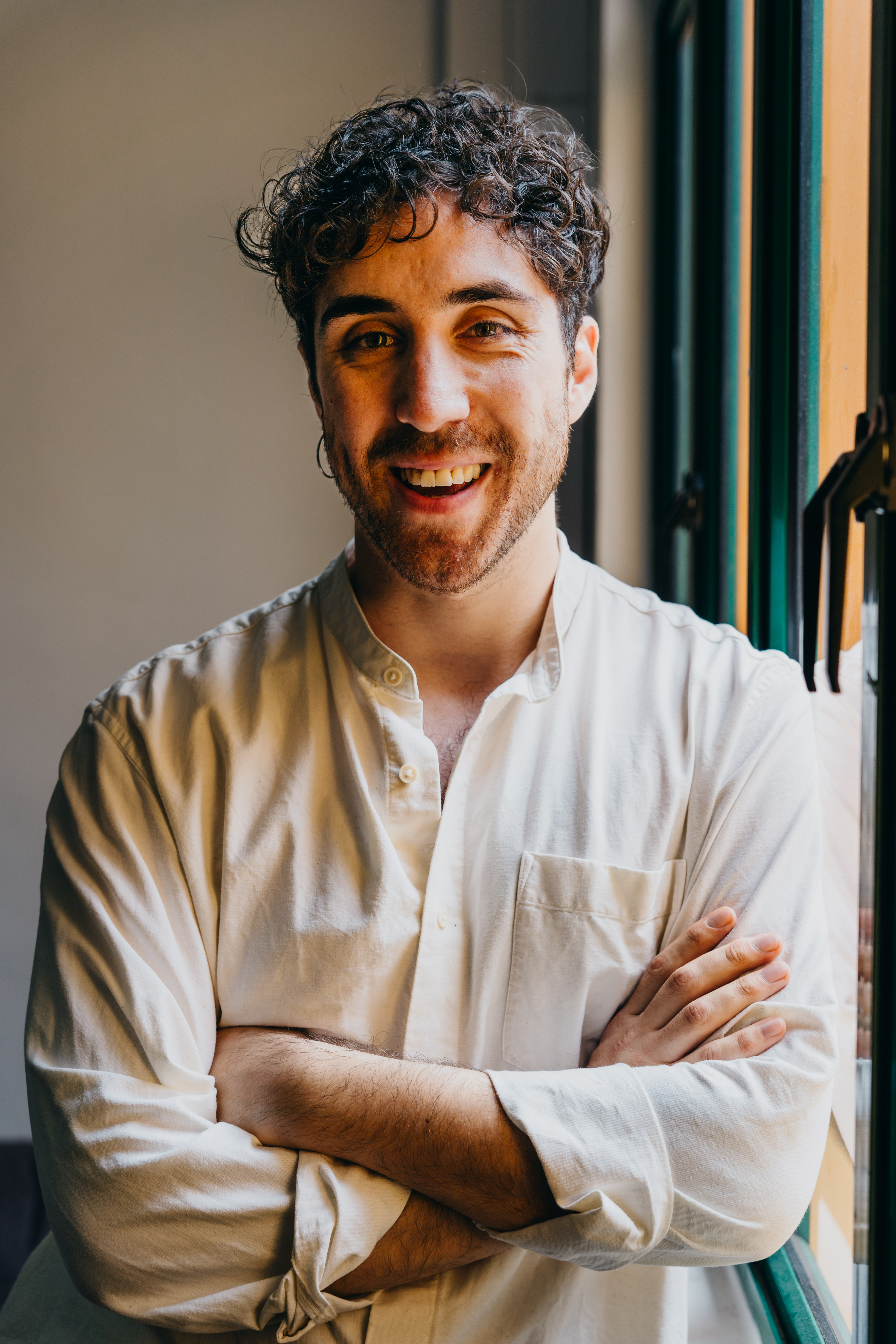
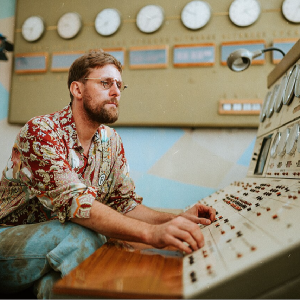
Ezequiel Rodríguez Chiacchio has been a long-time collaborator. We worked together on 1 Qubit, and over the summer we kept talking about where the work could go next and the different directions it might take. Those conversations also became a way of looking at how we work together. We are investigating the framework we work through by doing the work itself, and seeing what it makes possible as we go.
While I was back in Singapore over the summer, I also spoke with Janek Świerkowski and Adrian George. We talked about their work across art and science, and the questions that come up when those fields meet in a museum.
Select a point to explore its connections.
The genealogy does not describe a single lineage. It gathers moments where artists, scientists, technologists, and institutions have made new forms of seeing possible.
The work begins with a demand that remains open. Before choosing a medium or proposing a solution, I want to understand what makes a question actionable and whose knowledge shapes its terms.
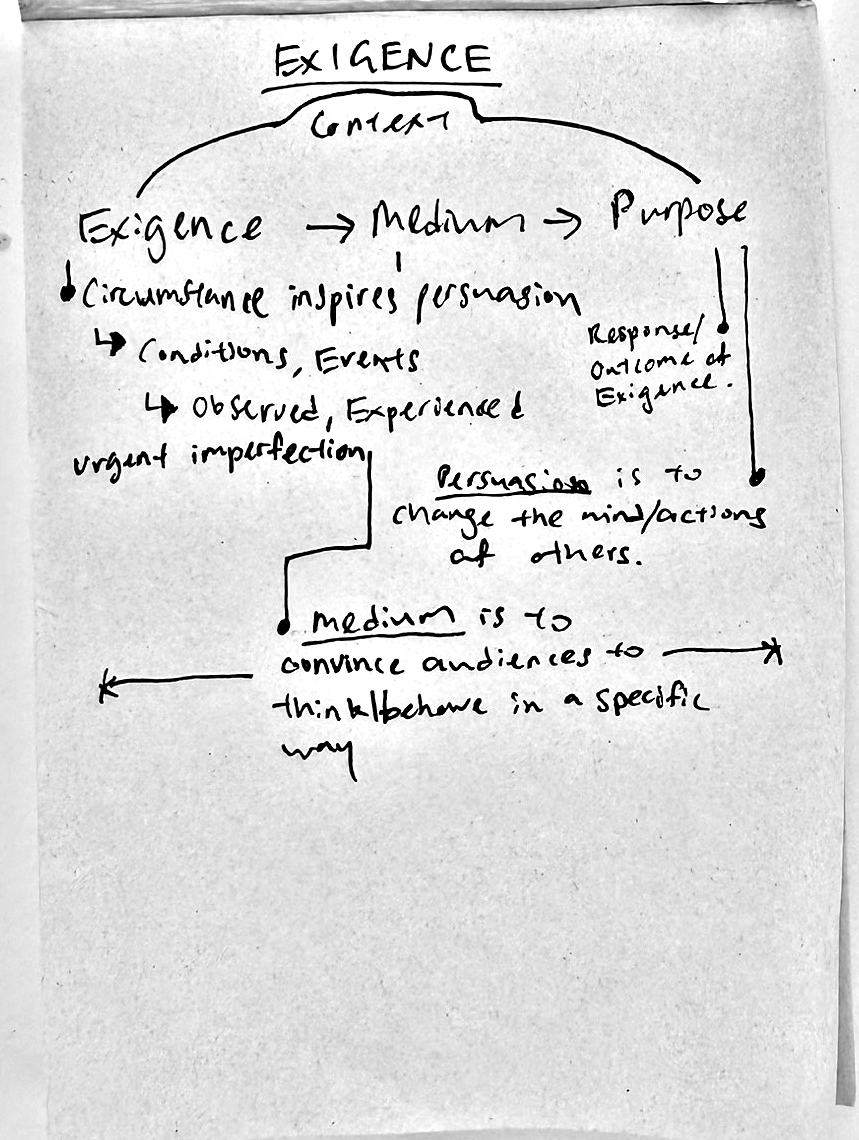
Exigence
In rhetorical theory, exigence names the condition that calls for discourse and response. Here, it holds a problem domain open—before its stakeholders, solutions, or disciplines are fixed.
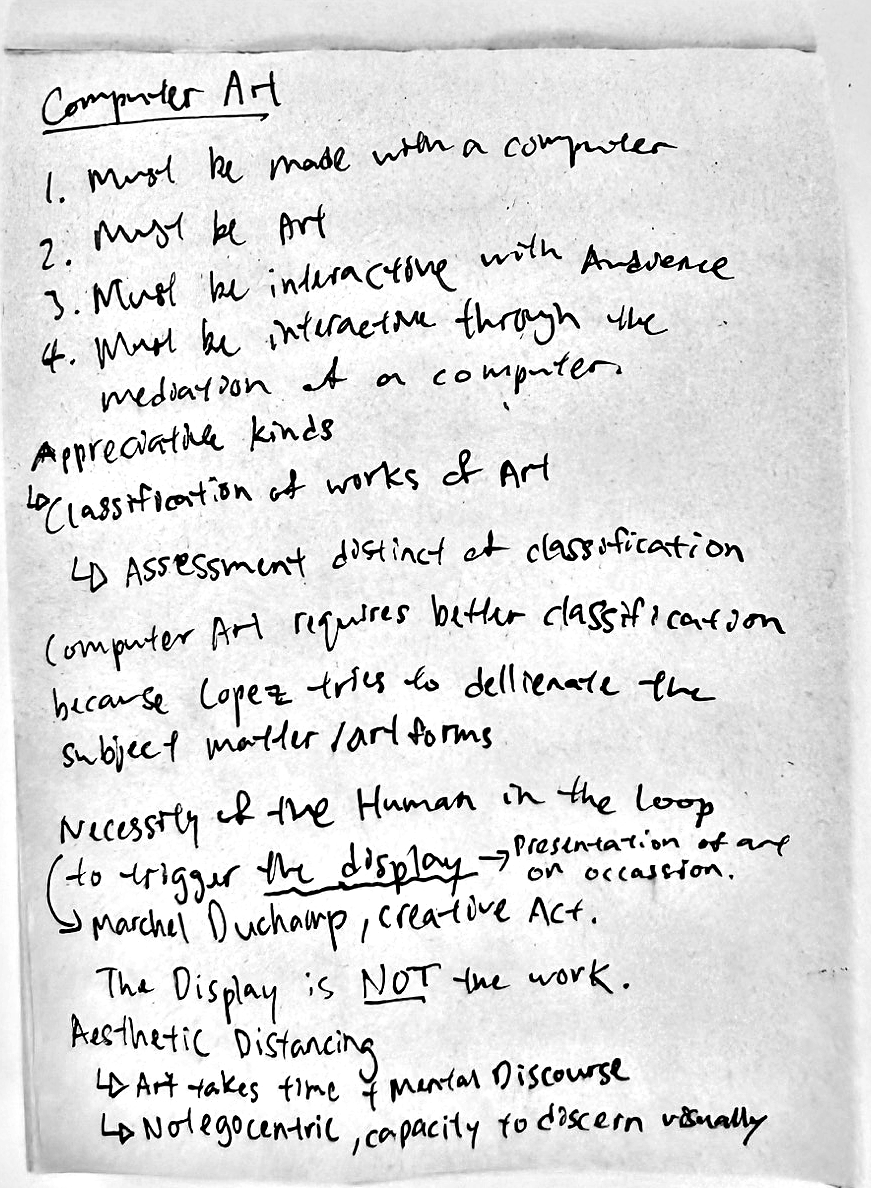
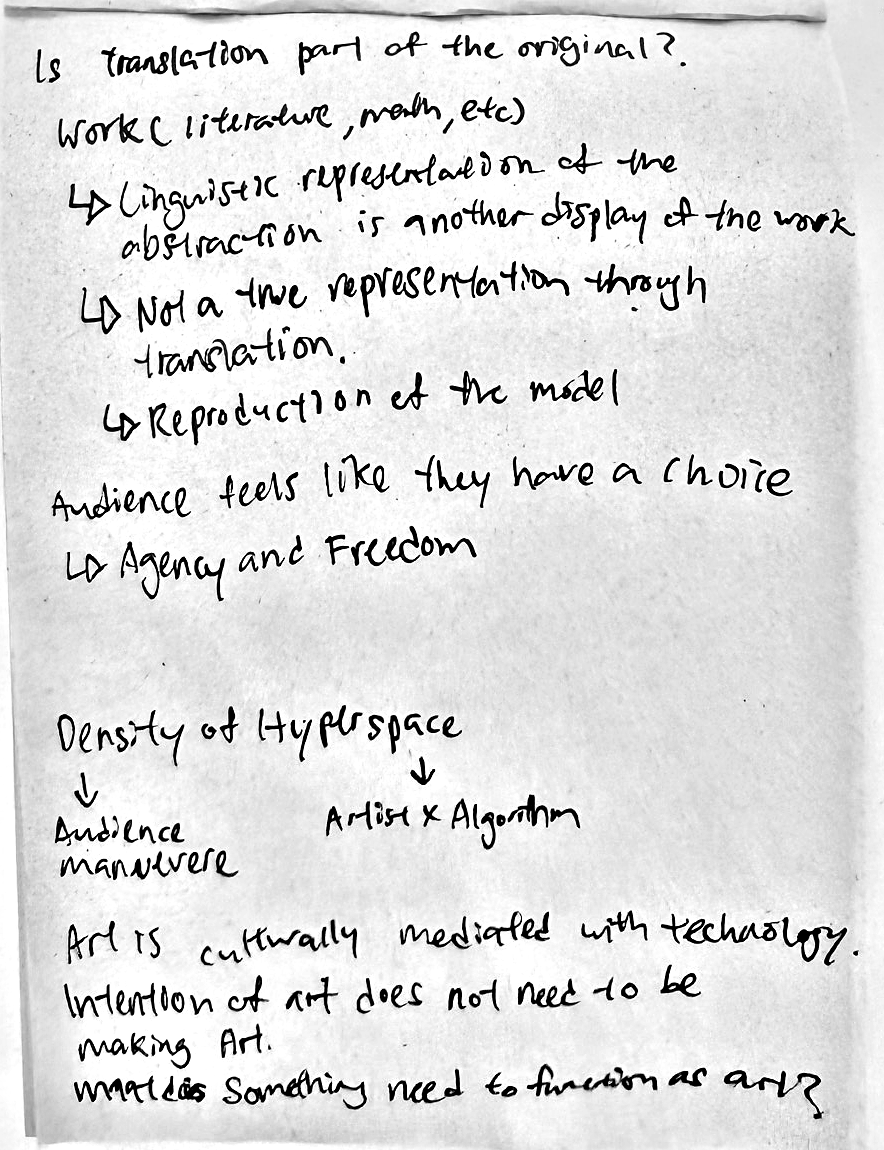
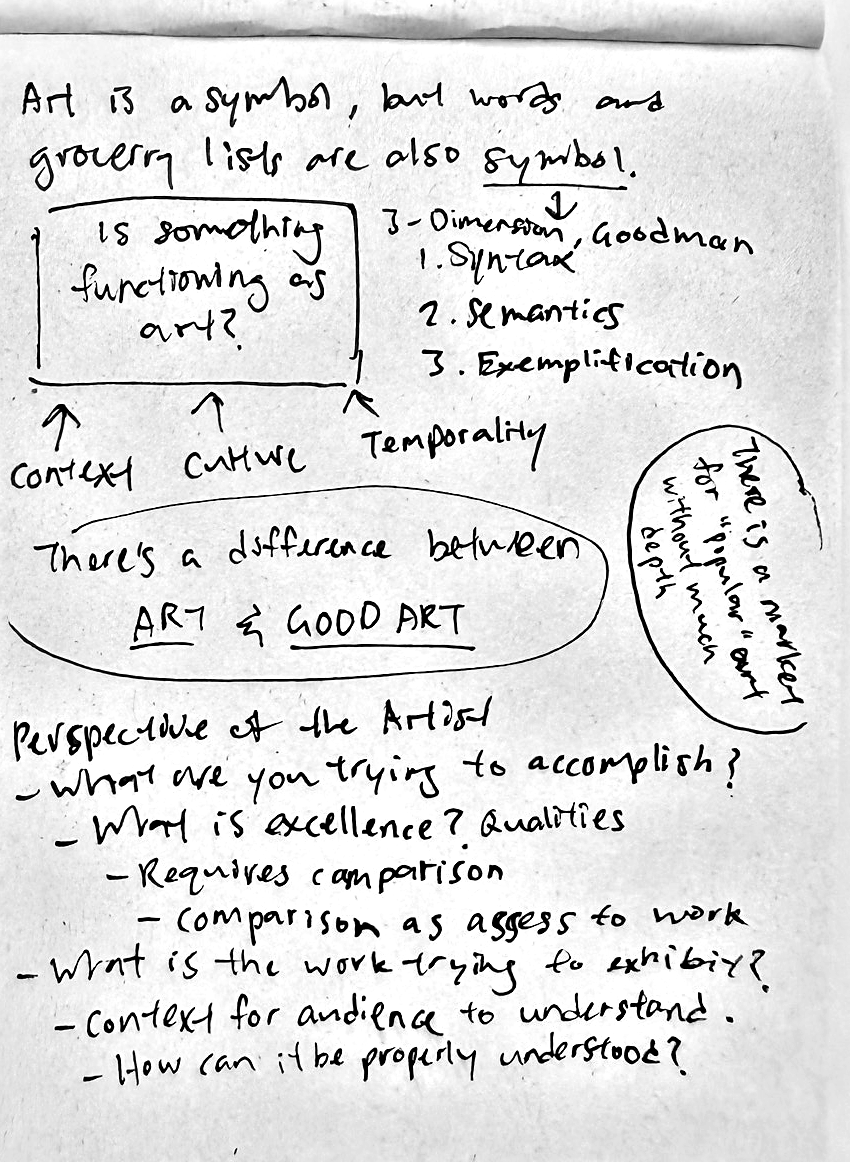
The process materials record the project changing through reading, discussion, drawing, and translation. They keep the method visible as it develops.
Process Material
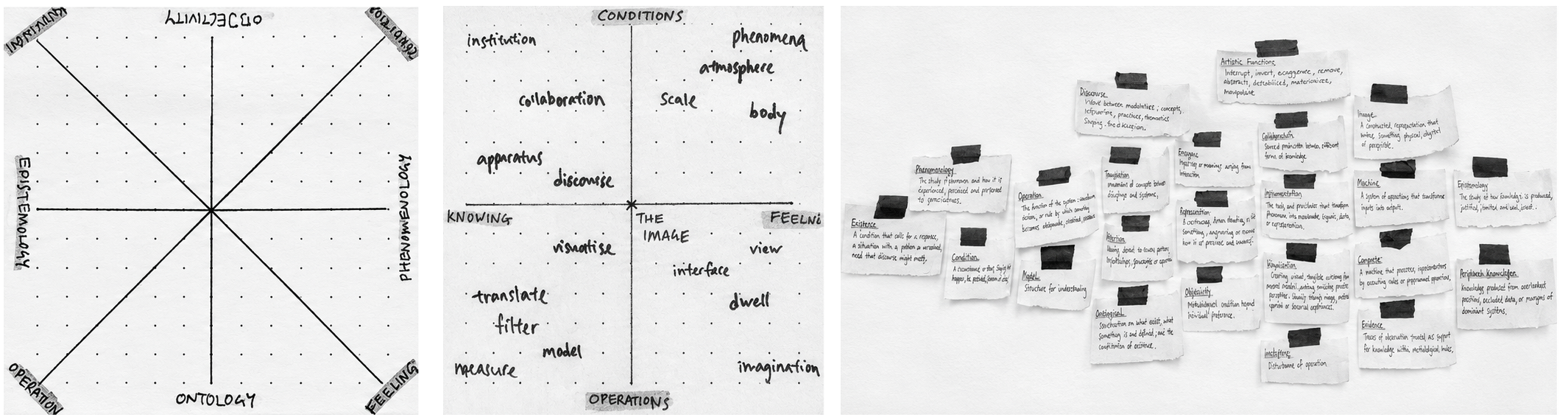
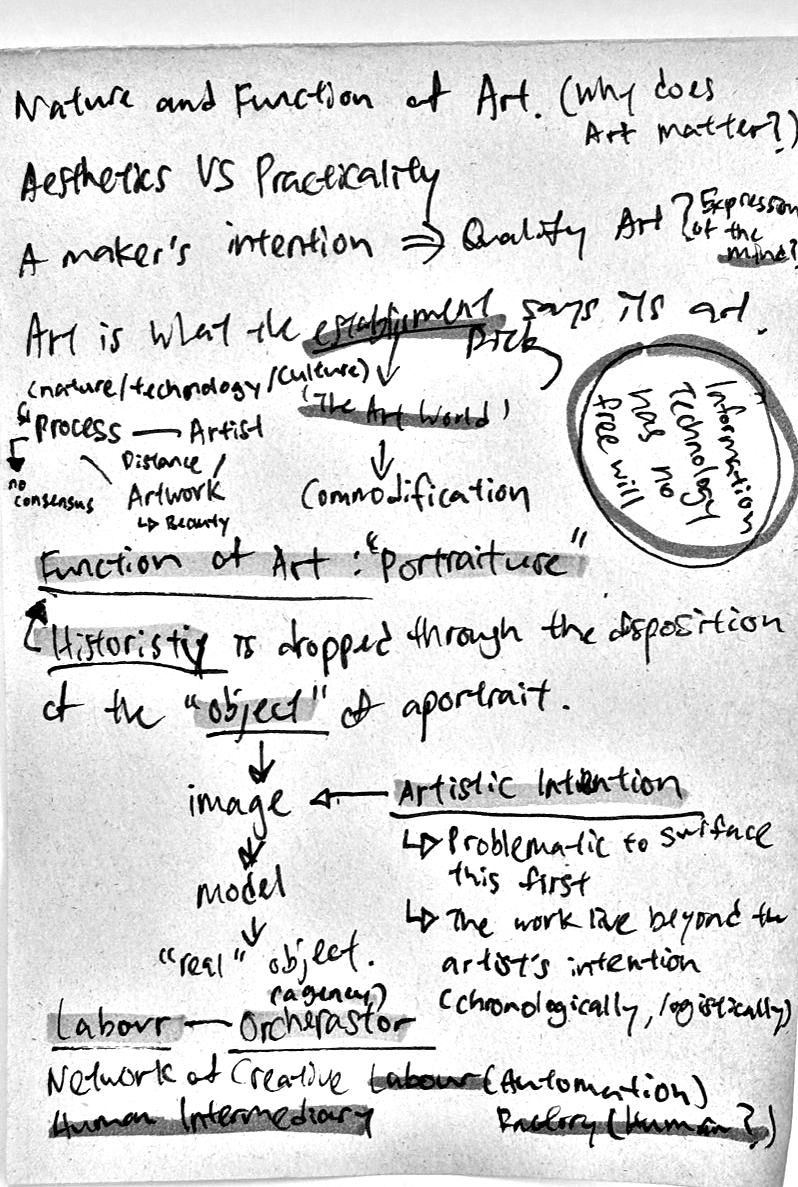
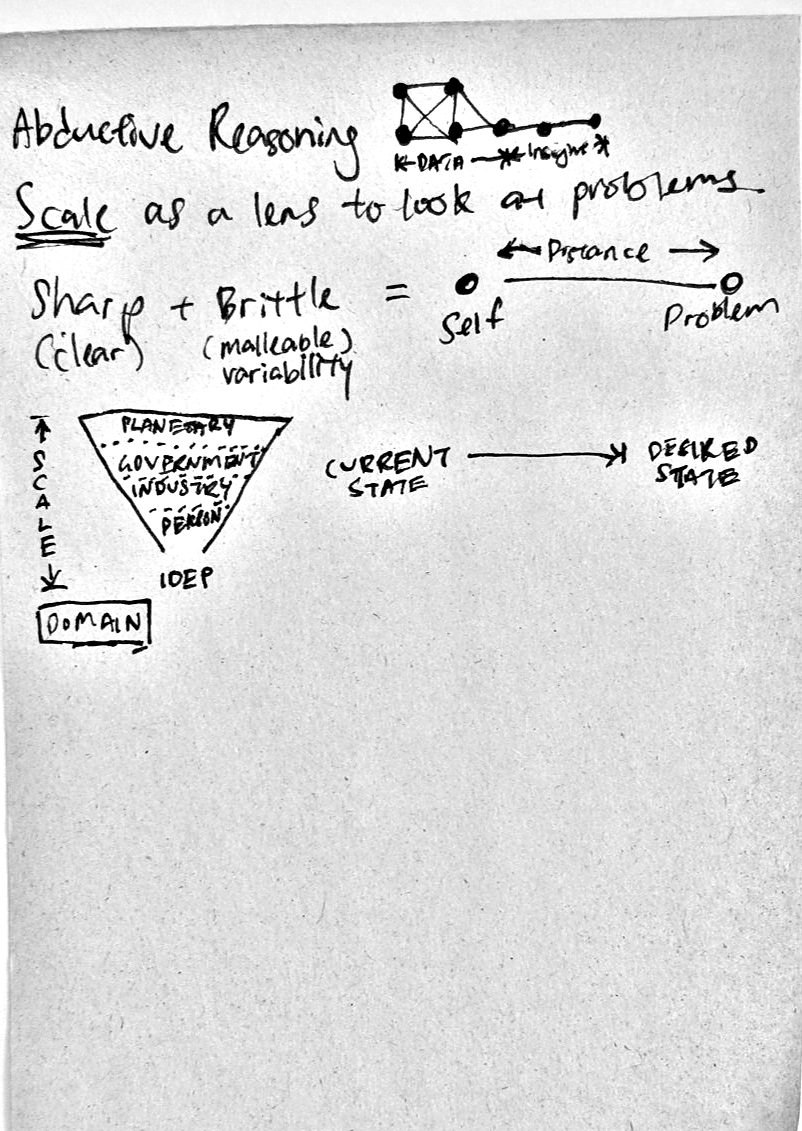
I began mapping the image as a relation among a phenomenon, its instruments, its institutional setting, and the bodies that encounter it. The diagram below holds these terms and axes in one view.
REPRESENTATIONPERIPHERAL
KNOWLEDGE
The relational field is a working map, not a universal taxonomy. Objectivity meets ontology; phenomenology meets epistemology. Between those positions, apparatus, scale, body, and perspective name choices that shape what an image can make present.
Artistic Method
Artistic method can interfere with systems that make images appear neutral. Changing a scale, removing a familiar reference, or making a hidden instrument visible can expose how evidence is produced.
Interrupting a process can reveal its assumptions. A changed scale, a removed reference, or a visible instrument can shift what counts as evidence and make the construction of an image easier to question.
A Field of Possibilities
A field of possibilities
Light · Quantum · Celestial mechanics · Evolutionary biology · Horticulture
Light, quantum phenomena, celestial mechanics, evolutionary biology, and horticulture are possible domains for testing the method. Each brings its own instruments, temporal scales, and forms of evidence.
Conclusion
Objectivity · Condition · Phenomenology · Feeling · Ontology · Operation · Epistemology · Knowing
The field offers a method for staying with uncertainty. By making translation and interference visible, artistic research can show not only what an image depicts, but how a claim becomes believable—and what remains at its edges.