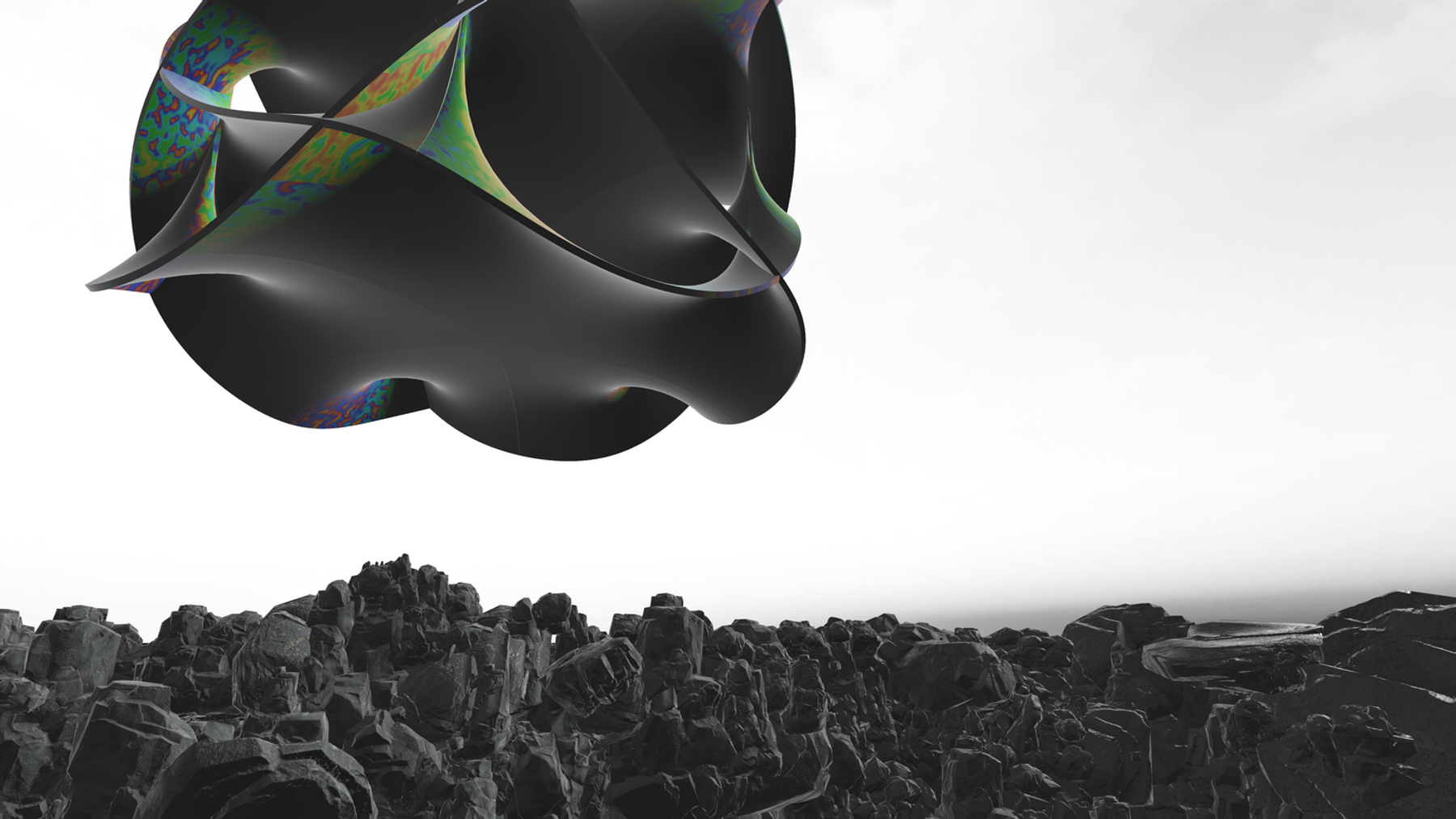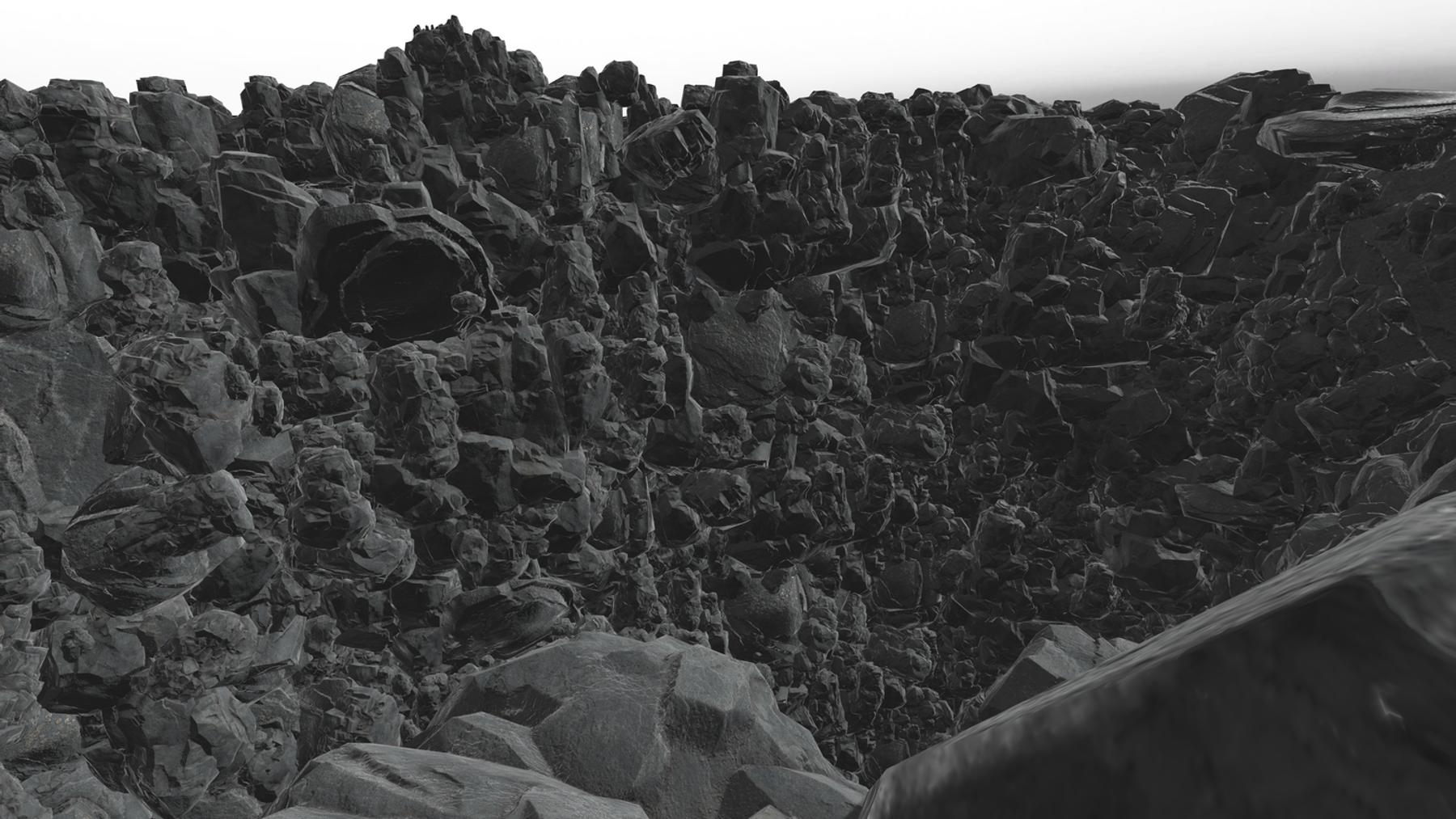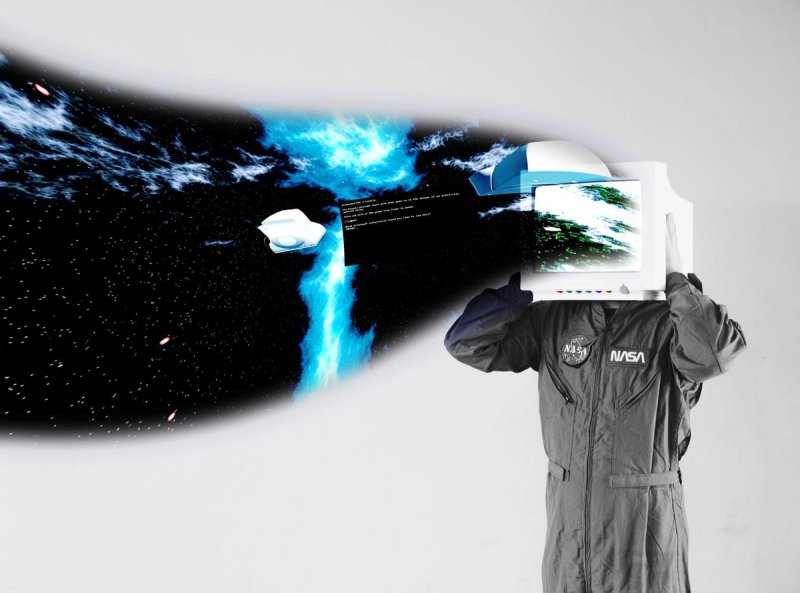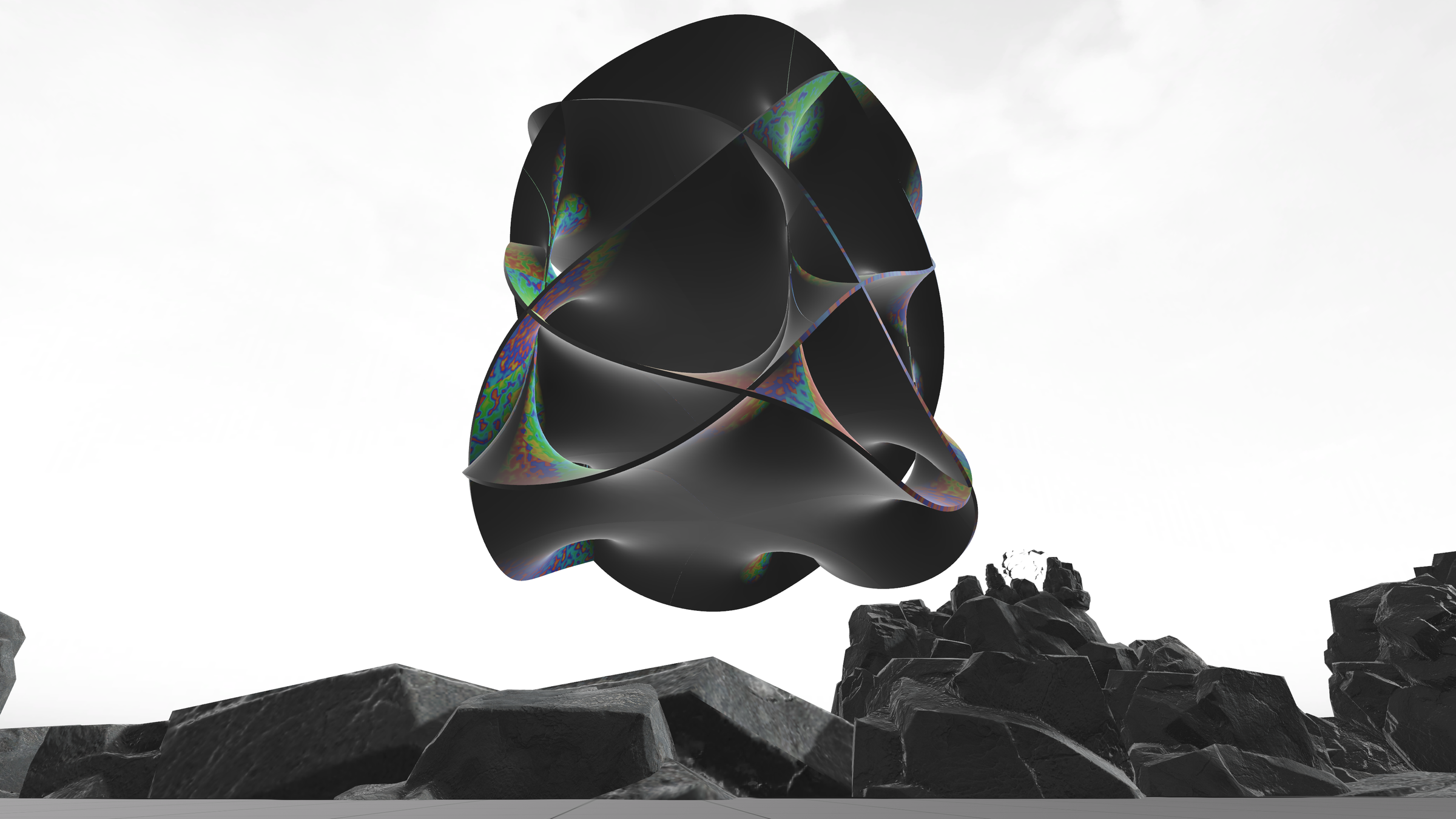
Latent Space is an indepth exploration into the relationship between data and our position in relations to it.
1 Abstract
Referencing High-Dimensional Space concepts and Generative Adversarial Network frameworks within Machine Learning, Latent Space explores the idea of a dynamic and ever changing digital space.
The creation of a manifold in Virtual Reality explores the relationship between data points themselves and also the user. Positional coordinates within a supposed three-dimensional space (x, y, z) shift and react based on the properties of the agent (w).
Keywords: Machine Learning, Human-Data Relationship, Metadata, Dynamic Manifold, Data Interface
2 High-Dimensional Space
In Machine Learning, High-Dimensional Space uses properties of data points and by considering all data points at the same time, an algorithm can create relationship and meaning across subsets of the dataset.
Using the T-SNE algorithm, clusters are formed based on said meaning: each word or pixel is considered a dimension which is then sampled and sorted. These clusters create the fundamentals of relationships.
3 The Visuals of Relationship
Dissecting the relationship of data, the space on VRChat grows based on collected metadata in real time through a web browser. An API updates the VRChat world environment and the Machine Learning algorithm (T-SNE) reclusters the elements.
Users within the space choose a metadata tag that is embedded into their account ID. Their positional coordinates within the space also, in turn, recluster the elements.
4 The Manifold
The space is represented by a floating manifold, within which elements cluster without the physics of gravity.
A manifold is not a physical form, but a mathematical concept that allows disjoint lumps to exist in a single logical body—a topological space not bound by vertex points to create form. Therefore, the outer form of the manifold constantly shifts based on live user data.
5 Our Position(s) with Data
Latent Space provides an alternative view to how we perceive our relationship with data on a primordial level. The work interpolates and re-interpolates the dataset of text with the user’s metadata in mind.
The shifting space creates dimensionality based on performance by the user and the algorithm—interpreting dimensionality as plotted against machine (x, y, z) and user (w).
6 Human-Machine Relationship
William Latham introduced the concept of the artist as a gardener, turning the machine into a generative garden. In this process, you cannot really say that you are using the horse as a tool, nor that you are collaborating with it. It is an agent, acting on its own and with you at the same time.
6.1 Why Machines should Learn?
Beyond logic-based operations, intelligence is usually conflated with rational thinking. The full entirety of a machine’s potential can and should exist beyond an infinitely expanding domain, yet we are not there yet. Adaptation to knowing how to know with and without supervision is key.
6.2 The Positionality of the Artist
Machine Learning offers a unique challenge to art because of its historical entanglements with an engineering culture that idealizes optimization and problem-solving.
For art production, engineers are trying to engineer computers to be creative. However, art is not just about creating new, beautiful things; it is a dimension of culture that responds to broader contexts.
Artists working with machine learning need to deal with high autonomy of these systems, bending them to their own aesthetic needs. The artist then needs to act more as a scientist rather than an engineer: experimenting, iterating and collaborating with the system.
7 .DICOM Format
Referencing the technical operation of MRI scans: converting a three-dimensional object into two-dimensional slices to be reconstructed into three-dimensional digital objects.
8.1 Traditional 3D manipulation
Creation of 3D objects are created mostly using vertice, curves or face manipulation—splitting, translating and sculpting control points, cages and primitives.
8.2 Deep learning mechanism: Convolution
Convolutional networks were inspired by biological processes: the connectivity pattern between neurons resembles the organization of the animal visual cortex. Individual cortical neurons respond to stimuli in a restricted region of the visual field (the receptive field). Receptive fields overlap such that they cover the entire visual field.
The goal would be to create a methodology of changing the input to be:
- Able to receive vertice information
- Manipulate vertices through this translation
- Reanalyse and recycle vertices
8.3 Dataset
Feeding the observational dataset with abstract geometries in both two-dimensional and three-dimensional data points, the machine anticipates and morphosis its own interpretation of geometries.