Jake Tan
New Media Artist/
Creative Technologist
SELECTED
MR(AI)
Dancing the Algorithm
Archive of Digital Plants
Analogue Is Dead
ADAM
CHRONOLOGICAL ALL WORKS
2025
- AR Tango︎︎︎ Art Reimagined
- VR Latent Space Pluritopia
- In Hot Waters
- Terrarium︎︎︎ SG Night Festival
- BIOS: Digital Nature Night Festival
- BIOS: A Conversation with the Wind
- AR/VR SUPERMAMA World︎︎︎ Milan Design Week
- BIOS 01 SG Art Week
- Networked Machines︎︎︎ SG Art Week
2021
- Archive of Digital Plants
- Golden Hour︎︎︎ SG Countdown
- AR Secret Garden: Lloyd’s Inn X SERIAL︎︎︎
- AR Hidden Garden: Lloyd’s Inn X UNIQLO︎︎︎
- AR ADM Grad Show 2021︎︎︎
- Interconnected Machines SG Art Week
2020
- AR Lucinda Law’s Botanical Art Experience Exhibition︎︎︎
- The Divine Forest
- In Vivo: Within the Living
- Creating Smart Textiles
- AR Creators Climate Action AR Campaign︎︎︎
2019
- AR BBC Earth: Botanical Art World
- AR The Bubble Tea Factory: Bobabae
- VR AISTRONAUT NOISE FESTIVAL
- AR THE SHŌNEN SERIES
- 4th DIMENSION (2nd Edition) (1st Edition)
- State Of The Arch
- Share Share Application
2018
- Me & My Shiny Teeth Application
-
ADAM
- ONE
- TV?
-
BUDJAM
-
SOUNDFLOWER︎︎︎
- AR VoyagAR︎︎︎
- Shy Shy Venus︎︎︎
- VR Voice of The Morning Star︎︎︎
- PHASE︎︎︎
- AR TamaGO!︎︎︎
- ROGUE Magazine︎︎︎
2017
-
NOMADIC︎︎︎
-
VR Train To Bishan︎︎︎
- 36-100-01︎︎︎
- MEMBRAIN Industries︎︎︎
- VR 360 Tour of Prambanan︎︎︎
- To Us︎︎︎
- 兄 Blood︎︎︎
2016
2014
 ︎
︎Singularities: Of Primordial Black Holes

Singularities: Of Primordial Black Holes
New Media SculptureJake Tan (SG), Peter Fisher (US)
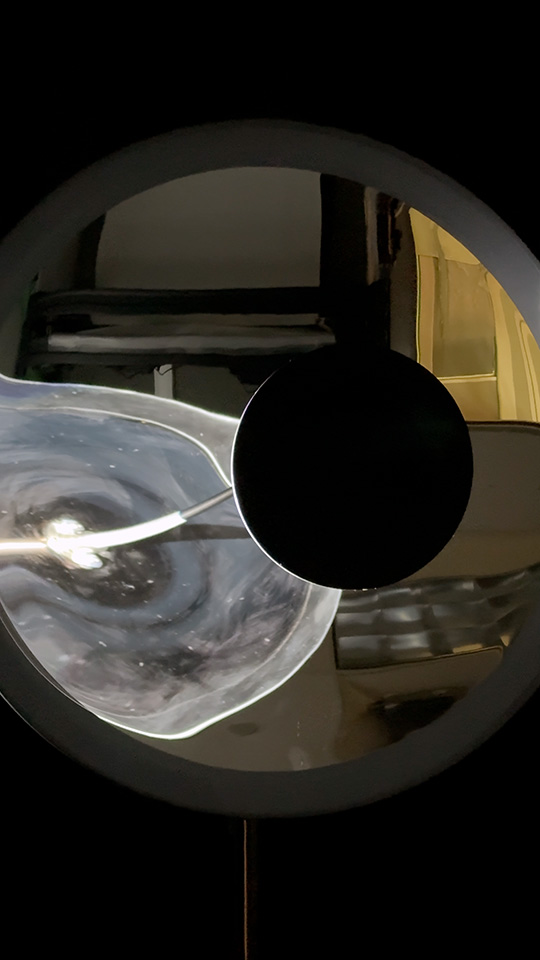
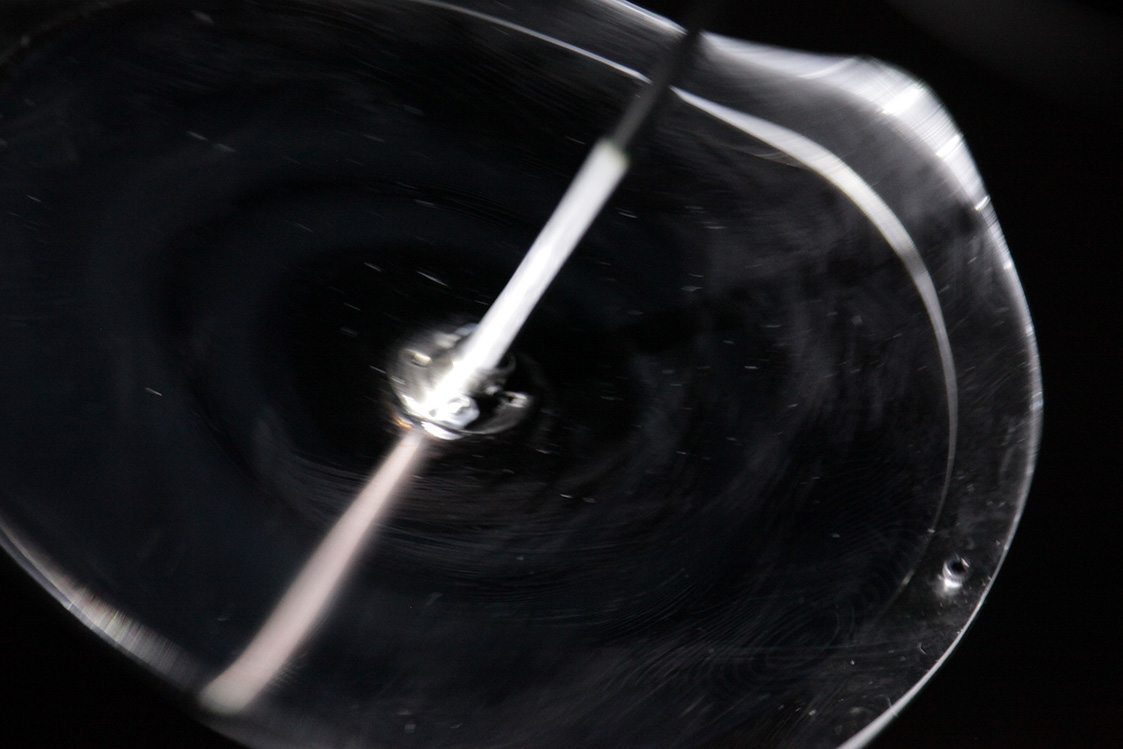
Singularities: Of Primordial Black Holes translates gravitational lensing into a physical, optical encounter through a sculpture with a silicon wafer at the center of it. The wafer is encoded to show the Hawking Radiation dispersion from a primordial black hole of the mass of the silicon wafer, and uses nano etched grated nanostructures to manipulate light in ways that echo how spacetime curves around celestial objects through the observer.
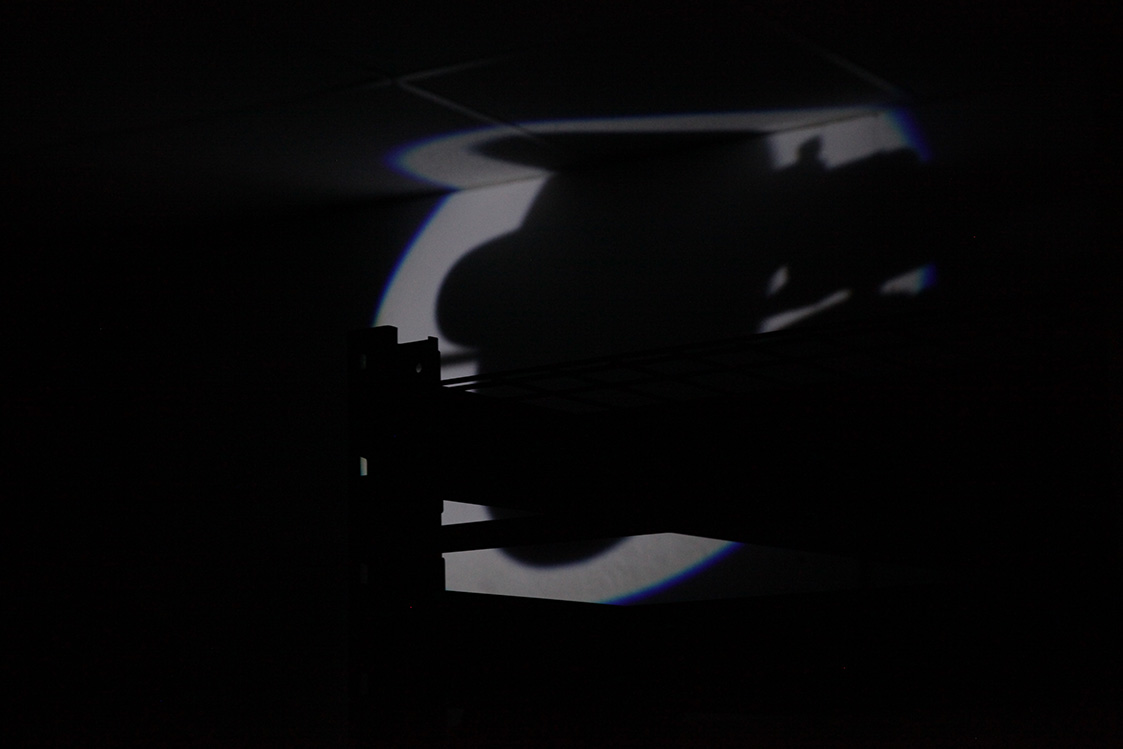
On the wafer, the etched field functions like a sculptural lens. Sub-wavelength patterns steer phase, amplitude, and polarization so that reflected or transmitted light forms distortions that resemble strong- and weak-lensing signatures. As viewers move, the patterns answer with parallaxing shears, arcs, Einstein-ring like halos, and caustics that thicken or thin with angle and distance. The viewer’s motion becomes the stand-in for a traveling photon and the wafer’s surface becomes a navigable section of curved spacetime.
The nano-etched 6” silicon wafer is experienced indirectly, through a large concave mirror that turns the wafer into a floating, magnified, kinetic apparition. The wafer is mounted on the end of a slender black metal rod, positioned 300 mm in front of a 600 mm diameter concave mirror. When a viewer stands in front of the mirror and looks toward its center, they do not look at the wafer itself but at a virtual image: a magnified, suspended disc of nano-lensing texture that hovers optically in front of the wall.


Collaborators
Peter Fisher (MIT Primordial Black Holes Group)
Vladimir Bolovic (MIT.nano), Chase Thomas (MIT.nano), Kurt Broderick (MIT.nano)
David Sekoll (Harvard SEAS), Joe Kile (Harvard SEAS), Graham Yeager (MIT Mars Lab)
Techniques
Aluminium Deposition, Photoresist Deposition, Photoresist & Aluminium Stripper(AZ300T), Ashing
Tools
AJA Sputter System, picoTrack, MLA150, Asher ESI, Metal Lathe, Drill Press, Various Machine Shop Tools
Material
6” Silicon Wafer, Concave Acrylic Mirror, Aluminium Rod, Servo Motor

A project done through MIT ACT’s Advanced Artistic Workshop & Transdisclipinary Research, STUDIO.nano led by Gediminas Urbonas and Tobias Putrih, with the support of MIT.nano.